loader image
 
Visit-Sogliano-al-Rubicone-Itinerari-e-Trekking-sentieri-didattici-Il-Sentiro-dei-pianeti_banner_giusto

Il Sentiero dei Pianeti - Sogliano al Rubicone

Information

SENTIERO PERCORRIBILE

Itinerario didattico dedicato al sistema solare.

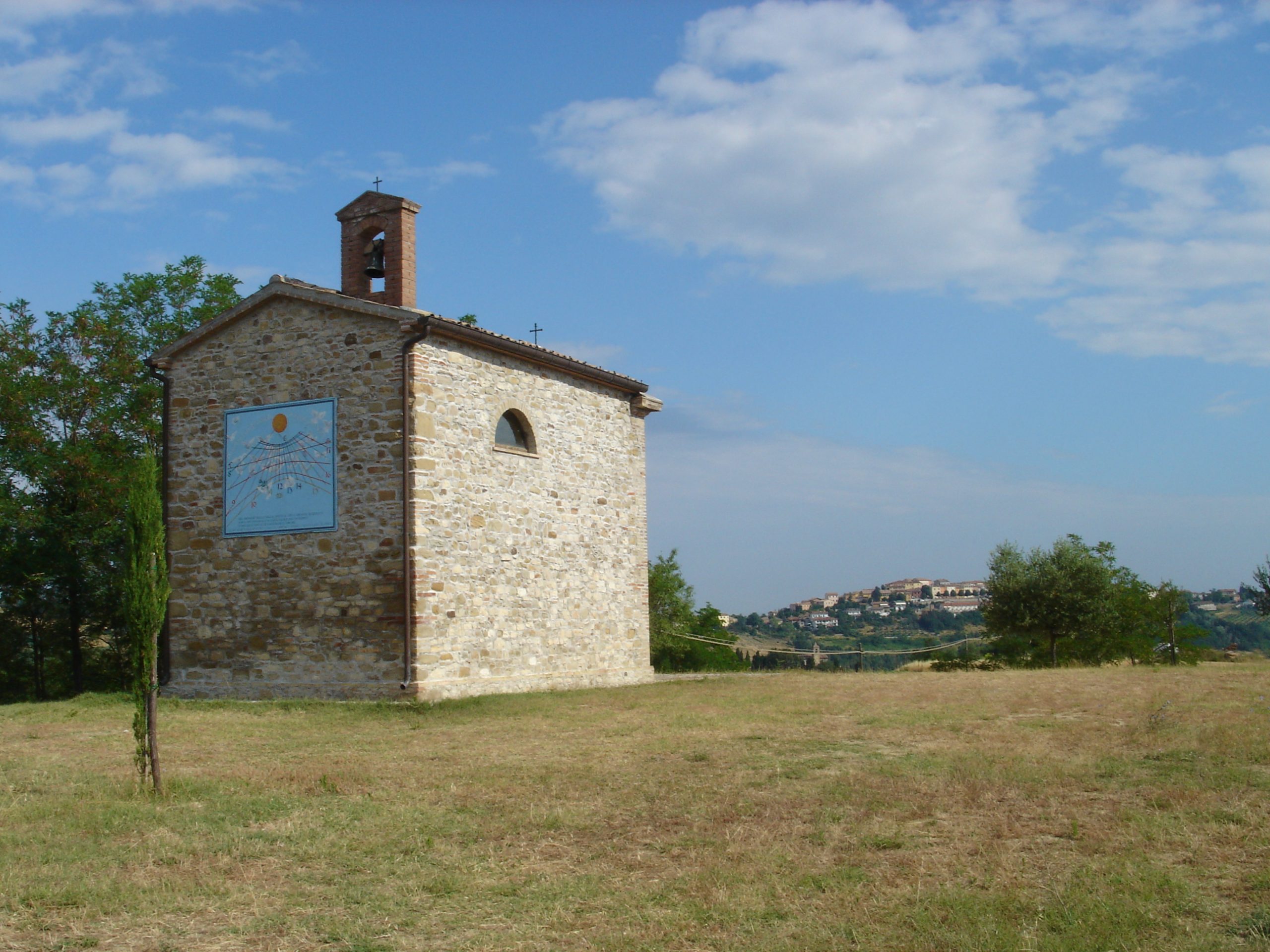
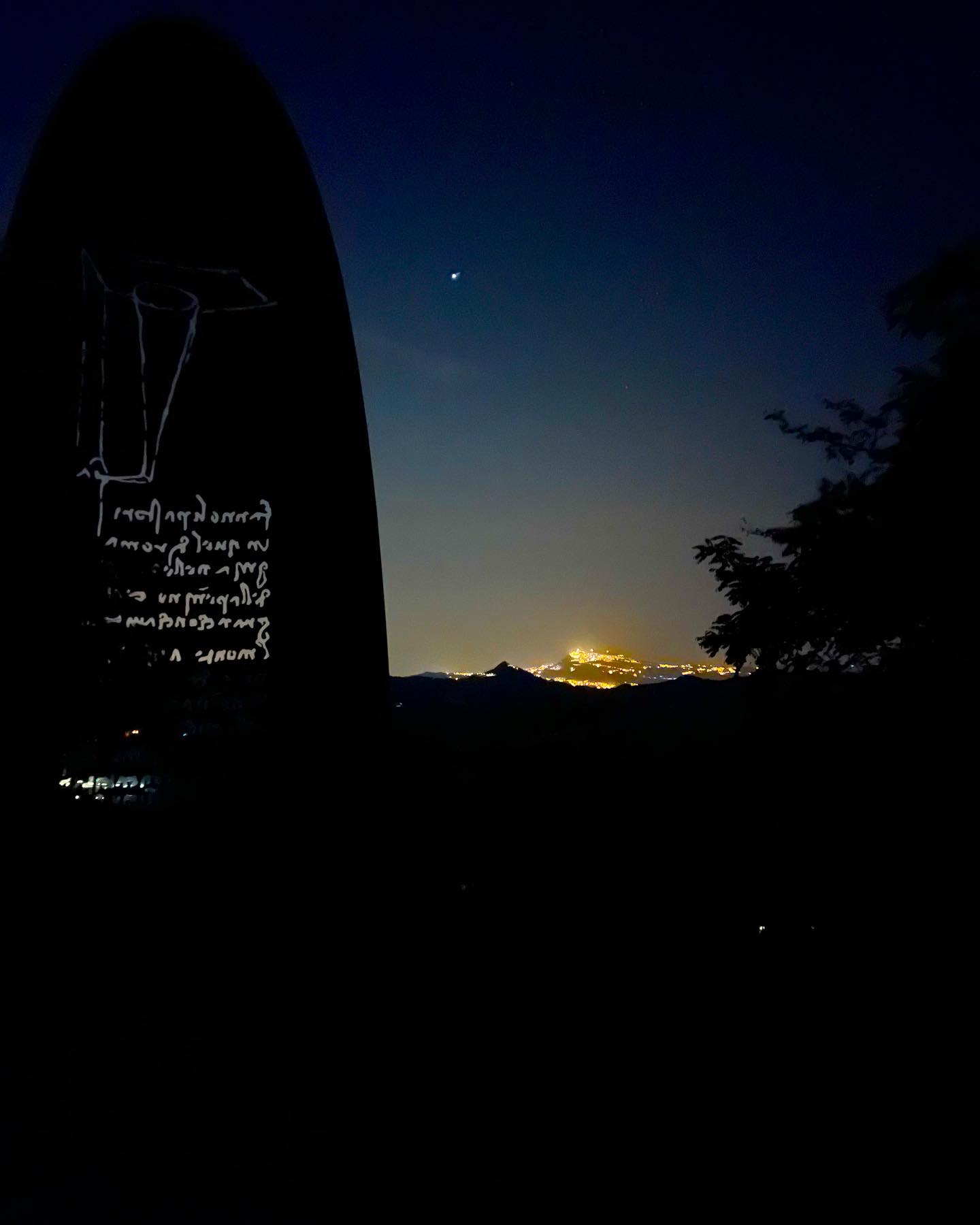
Parco San. Donato e Concavità di Leonardo da Vinci, via Vignola Chiesa, Sogliano al Rubicone

TREKKING, MTB.

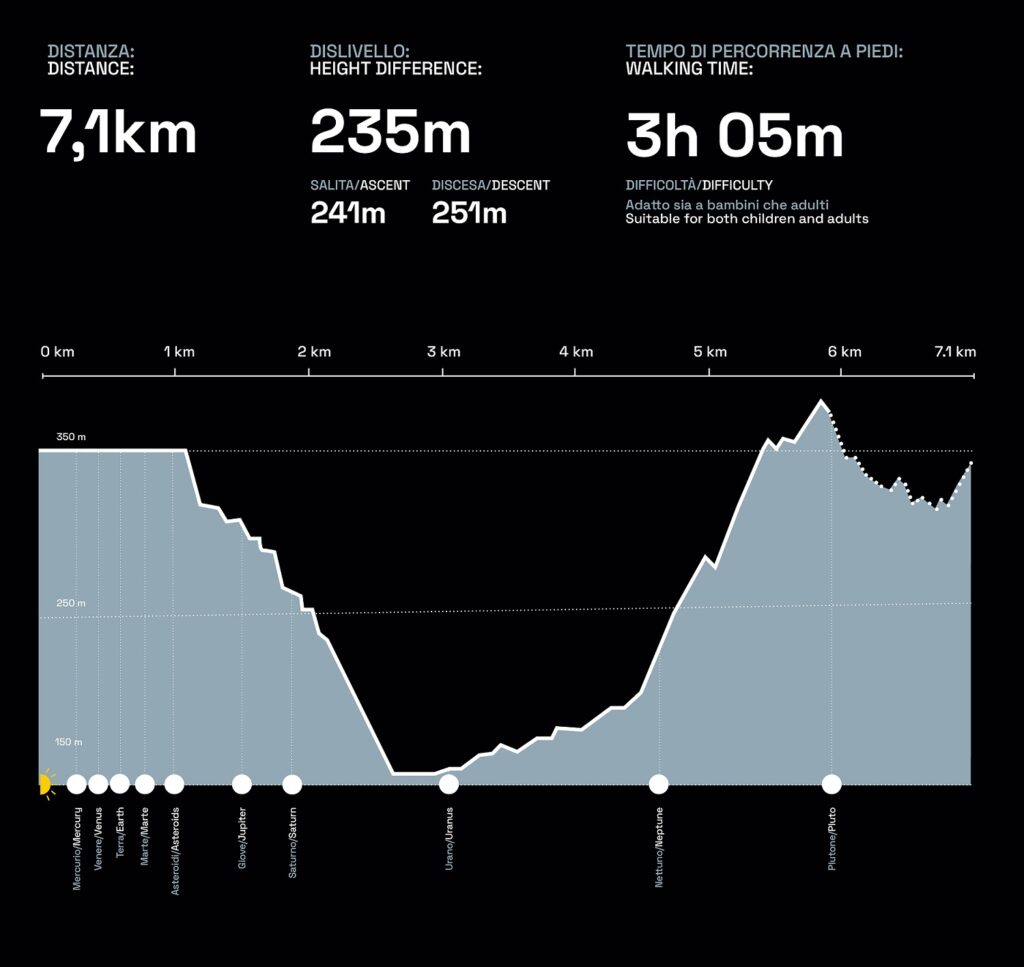
Tempo percorrenza indicativo (a piedi): 3h 05m

Distanza: 7,1 km

Dislivello: 235 m

Contatti: +39 0541817340

Vuoi percorrere il Sentiero dei Pianeti in compagnia di un esperto?

Gruppi di camminatori, scuole, appassionati di trekking ed astronomia possono contattare direttamente l’Ass. Astrofili Soglianesi Vega per concordare una visita guidata in compagnia di un esperto astrofilo ad illustrare i pannelli didattici:

email: info@astrofilisoglianesi.it
tel.: +39 3471038294 (WhatsApp)
http://www.astrofilisoglianesi.it

Pathway:

The Path of the Planets of Sogliano al Rubicone is an educational path of about 7 km born from the idea of the Soglianesi VEGA Amateur Astronomers Association, with the support of the Municipality of Sogliano al Rubicone. Notions of astronomy and outdoor activities, an educational ring and imaginary classroom that has the sky, the sea and the green Apennines as its walls.

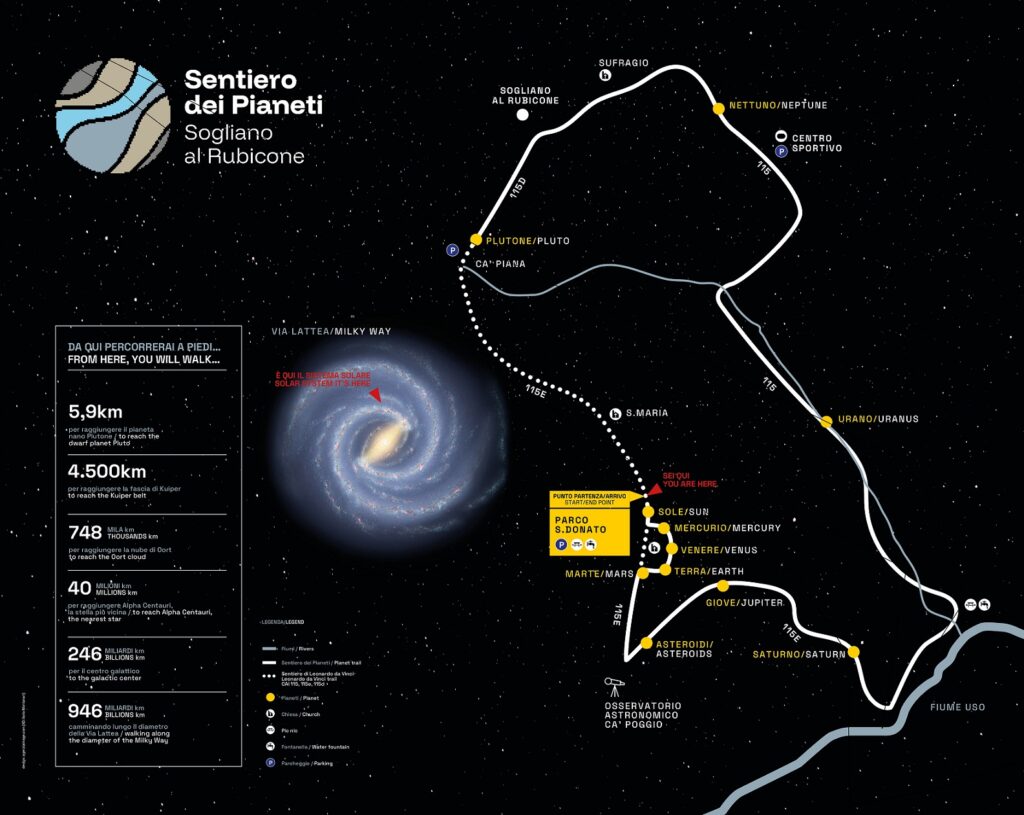
Along the path (built with a scale of 1 meter = 1,000,000 km) there are 11 stations positioned in such a way as to be able to reproduce, perfectly respecting the scale adopted, the relative distances of the individual planets from the Sun and between them. Each station is well identified by the presence of a large panel, enriched with scientific data with the description of the main characteristics and peculiarities of the celestial body: the size of the planets to scale, one or more images taken by space probes during the latest explorations. Two arrows indicate the partial distances to be covered to reach the “station” that precedes or follows the one in which you are.

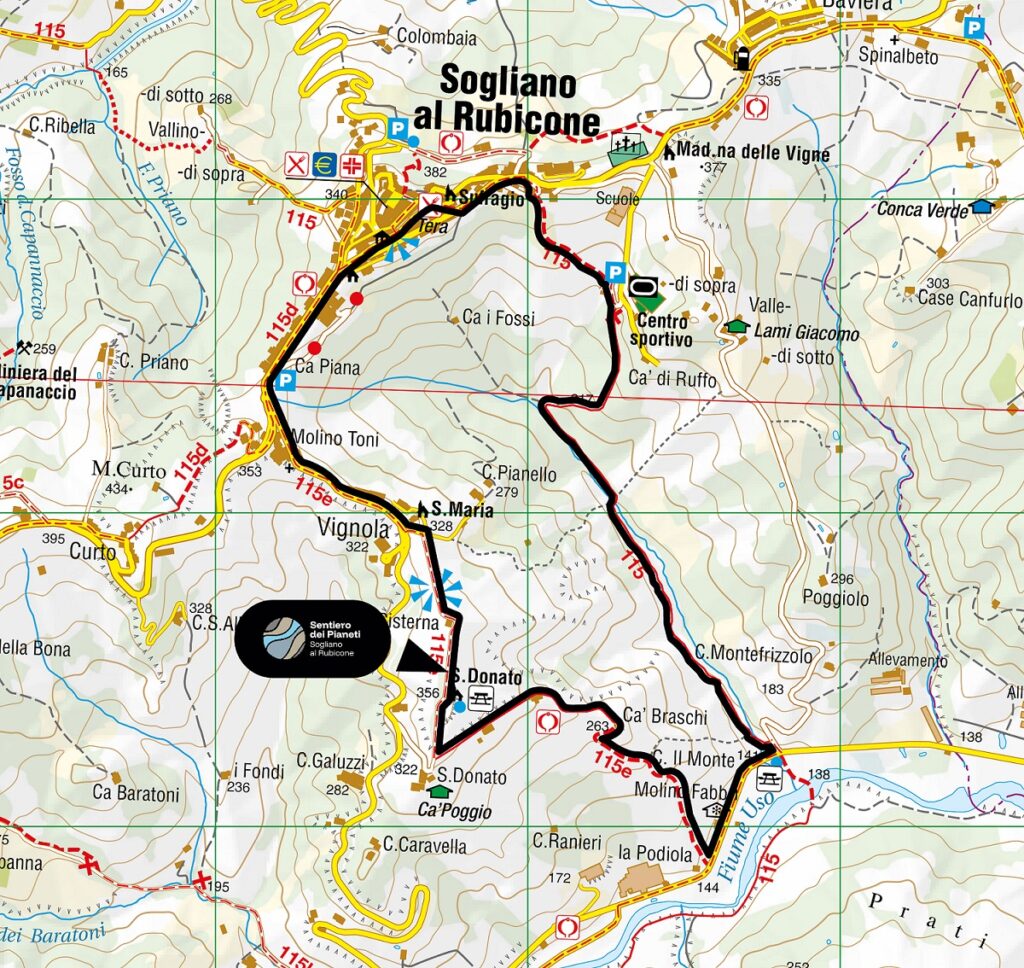
The Path of the Planets of Sogliano al Rubicone, starting and finishing at San Donato park, develops along the “Sentiero di Leonardo Da Vinci” ring, a section of the CAI network of the Upper Rubicon Paths (represented in the map “Alta Valle del Rubicone” 1:25.000 Monti Editore at numbers 115e, 115 and 115d). We recommend appropriate clothing and hiking shoes. Have a good walk.

.
HISTORY OF THE SOLAR
SYSTEMThe Solar System was formed about 4.6 billion years ago from a dense cloud of interstellar gas and dust that collapsed probably due to the shock wave of a nearby exploding star, called a supernova, giving rise to the Sun, which represents more than 99% of the matter that makes up the entire Solar System, the 8 planets, the 4 dwarf planets and hundreds of moons. Other smaller, more irregular fragments of the early Solar System, which at the time failed to fuse together to form a planet, gave rise to millions of asteroids, comets and meteoroids.
The Solar System is located in the Milky Way, a “barred spiral” galaxy composed of two main arms and two smaller arms: more precisely, the Sun, and therefore the entire Solar System, is located in a small outermost arm called the “Orion Arm”, between the arms of Sagittarius and Perseus. It orbits the center of the Milky Way at about 828,000 km/h, completing an orbit around the galactic center in about 230 million years at this speed.To understand distances in the solar system, scientists use the Astronomical Unit (U.A.), which is the distance between the Earth and the Sun: about 150 million km. The Solar System extends far beyond the planets, including the Kuiper Belt (beyond Neptune’s orbit from 30 to 80 AU), composed of a ring of icy bodies almost all smaller than Pluto and, beyond its outermost boundaries, the Oort Cloud, a gigantic spherical shell that surrounds the entire Solar System, composed of icy fragments (comets) that orbit the Sun up to 1.6 light-years away, extending from 5,000 to 100,000 AU.

Photo gallery

Condividi

Privacy Overview

This website uses cookies so that we can provide you with the best user experience possible. Cookie information is stored in your browser and performs functions such as recognising you when you return to our website and helping our team to understand which sections of the website you find most interesting and useful.